Phenibut · Sold as a nootropic
The supplement
that keeps landing
people in the ICU.
Phenibut is a Soviet-era central nervous system depressant now sold online across the United States as a "cognitive enhancer" and sleep aid. It is not approved by the FDA for any medical use — yet it is legal, unlabeled, and, poison-center data show, increasingly sending people to emergency care.
By the numbers · U.S. poison centers
Source: CDC MMWR, phenibut exposures reported to poison centers, 2009–2019. See references.
In an emergency
- Emergency: 911
- Poison Control: 1-800-222-1222
- Suicide & Crisis Lifeline: 988
If you use phenibut regularly, do not stop abruptly without medical guidance — abrupt withdrawal has been linked to seizures and other serious effects. U.S. numbers shown.
What is Phenibut?
Medical Background
Phenibut (β-phenyl-γ-aminobutyric acid) is a synthetic central nervous system depressant developed in Russia in the 1960s, where it has been used clinically as an anxiolytic and nootropic.[4]
In Russia and some neighboring countries it has been prescribed for conditions such as anxiety and insomnia. It is not an approved medicine in the United States.[4, 5]
Phenibut is not approved by the FDA for any medical use in the United States, and the FDA has stated it does not meet the legal definition of a dietary ingredient.[2, 3]
See References below
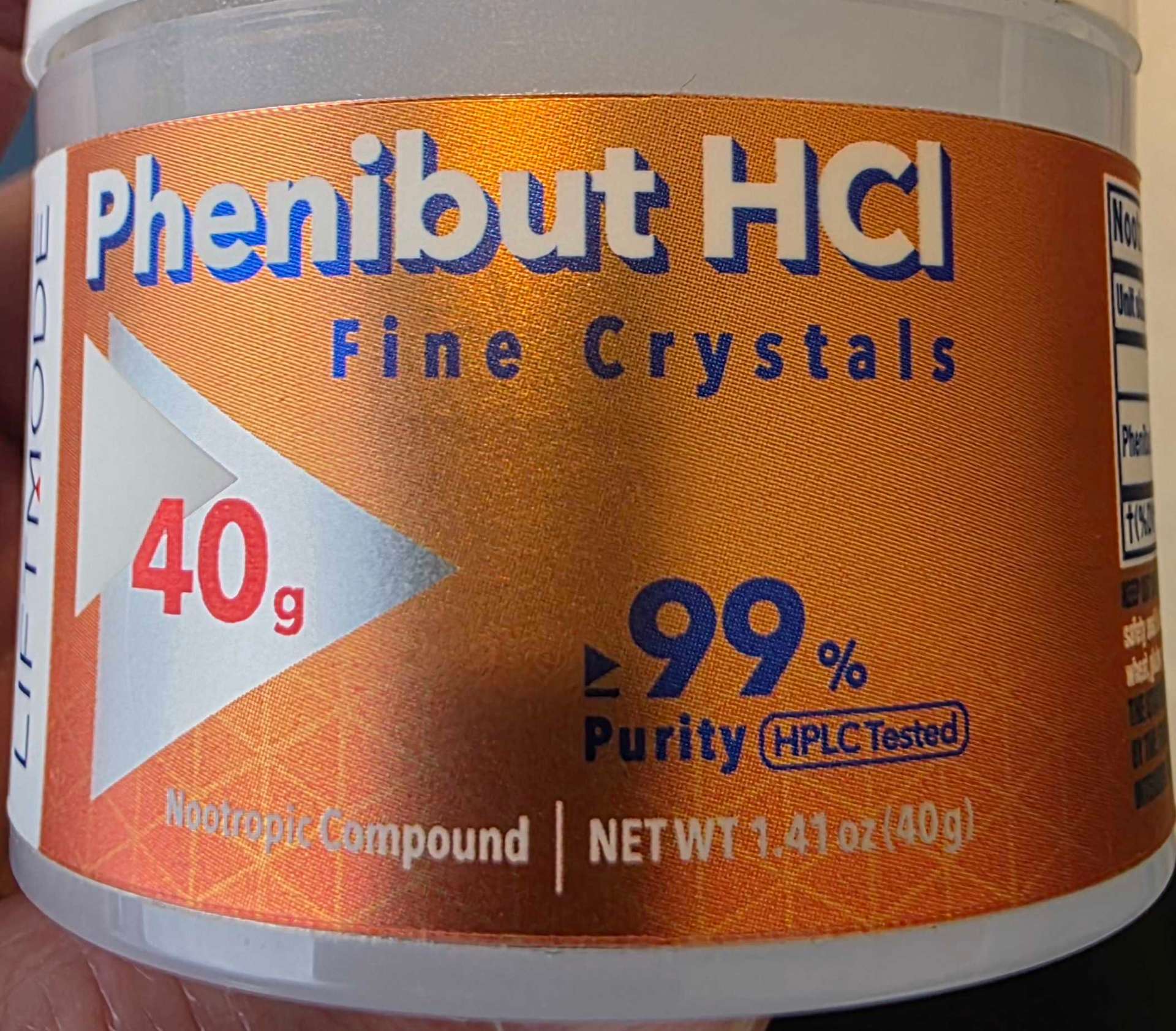
View Phenibut Container Details →Current Availability
Despite lacking FDA approval, phenibut is widely sold online in the United States and elsewhere, often marketed as a "nootropic," "cognitive enhancer," or sleep aid.[5]
Retailers frequently use marketing language that avoids specific medical claims, which can obscure the fact that phenibut is a potent psychoactive substance.[5]
In 2019 the FDA issued warning letters to companies marketing phenibut as a dietary supplement, stating those products are misbranded.[2]
See References below
How Does Phenibut Work?
Phenibut is structurally related to the brain's inhibitory neurotransmitter GABA (gamma-aminobutyric acid), with an added phenyl ring that helps it cross the blood-brain barrier.[4]
It acts primarily as an agonist at GABA-B receptors (similar to the prescription drug baclofen), producing calming and sedative effects, and has some activity at GABA-A receptors.[4]
It has also been reported to influence dopamine signaling, which may contribute to its mood-altering and potentially habit-forming properties.[4]
Health Risks and Side Effects
About the Phenibut Container Image
This is one example of how phenibut is sometimes sold — as a "nootropic compound" with high purity claims, without warning labels about dependence, withdrawal, or overdose risk.
Learn more about this container →Commonly Reported Effects
- Drowsiness or lethargy
- Agitation
- Rapid heart rate (tachycardia)
- Confusion
- Dizziness and nausea
Most frequent effects in CDC poison-center data[1]
Severe Reactions (Reported)
- Reduced consciousness
- Respiratory depression
- Seizures
- Agitation and psychosis
- Overdose (rare deaths reported)
Dependence & Withdrawal
- Tolerance with repeated use
- Rebound anxiety and insomnia
- Tremors and sweating
- Agitation and, in some cases, psychosis
Described in a published case report of phenibut withdrawal[7]
Rise in Poison Center Reports (2009–2019)
All figures below are from the CDC's analysis of U.S. poison-center calls for phenibut exposures during 2009–2019.[1] Poison-center "exposures" are reported calls, not confirmed diagnoses or a complete national count.
Phenibut exposures reported to U.S. poison centers during 2009–2019.
Share of reported exposures that were life-threatening or caused significant disability; three deaths were reported.
Share of reported exposures that were in men.
Share of calls (1,122 of 1,320) that originated from health care facilities.
Key Findings from CDC Poison-Center Data[1]
Demographics
Most reported exposures (58.4%) occurred in adults aged 18–34 (mean age about 32), and 75.5% were in men.
Trend
Reported exposures were low through 2014 and rose sharply during 2015–2019. The CDC noted this coincided with wider online availability, though poison-center data cannot establish the cause of the increase.
Where Calls Came From
Most calls (85.0%; 1,122 of 1,320) originated from health care facilities. The most common effects reported were agitation (30.4%), drowsiness or lethargy (29.0%), tachycardia (21.9%), and confusion (21.3%).
Severity
One in eight reported exposures (12.6%) were life-threatening or resulted in significant disability, and three deaths were reported over the study period.
Illustrative Stories
The following are fictional composite scenarios written for education. They are not real, identifiable people, and no quoted speaker below is a real individual. They illustrate patterns described in published case reports and poison-center surveillance.[1, 7]
I started taking phenibut for social anxiety. Within weeks I needed more for the same effect, and when I tried to stop I had severe anxiety, insomnia, and tremors. The clinic I went to had little experience with phenibut withdrawal.
My son bought phenibut online to help with exam stress and didn't realize how strong it was. After mixing it with alcohol he became dangerously sedated and needed emergency care. Products like this often carry no real warnings.
In clinical settings, phenibut cases can be missed because people don't consider a 'supplement' a drug. What looks like an anxiety crisis can actually be withdrawal from a GABA-active substance.
Why Phenibut Concerns Clinicians
Published reviews and case reports describe a combination of potent GABA-active effects, no standardized consumer dosing, and unfamiliarity among some clinicians. People who use phenibut regularly may not realize it can cause physiological dependence, and abrupt discontinuation has been associated with distressing and, in some reports, serious withdrawal, including agitation and psychosis.[4, 6]
Summarized from the cited literature — not a statement by a named individual.
Preventive Measures and Resources
Poison Control Center
Call 1-800-222-1222 immediately if you suspect phenibut poisoning or overdose.
Call NowSAMHSA Helpline
Substance Abuse and Mental Health Services Administration provides 24/7 treatment referral and information.
Call Now988 Suicide & Crisis Lifeline
Free, confidential, 24/7 support in the U.S. for suicidal crisis or emotional distress. Call or text 988.
Call NowCDC: Phenibut Exposures Report
The CDC MMWR analysis of U.S. poison-center phenibut exposures, 2009–2019.
Learn More (opens in a new tab)FDA: Phenibut in Dietary Supplements
The FDA page explaining why phenibut does not meet the definition of a dietary ingredient.
Learn More (opens in a new tab)Find Treatment (SAMHSA)
Search for local substance-use treatment facilities via the U.S. government FindTreatment.gov tool.
Learn More (opens in a new tab)Primary Sources & Further Reading
These are the primary sources this site draws on. They open in a new tab.
Contact Us
Have questions, a correction, or information to share? Send a message and we'll reply when we can. This mailbox is checked periodically by the site's volunteer operator.
Please don't use this form for emergencies — it is not monitored continuously. For urgent help, use the crisis numbers above.
Frequently Asked Questions
- Is phenibut safe?
- Phenibut is not approved by the FDA for any medical use in the United States. U.S. poison-center data (CDC, 2009–2019) recorded 1,320 exposures, 12.6% of which were life-threatening or disabling, and three deaths. It can cause dependence and withdrawal, so it is not considered a safe consumer supplement.
- Is phenibut legal in the United States?
- Phenibut is not an approved drug and does not meet the FDA definition of a dietary ingredient. In 2019 the FDA issued warning letters to companies selling it as a supplement, meaning those products are misbranded. It is nonetheless sold online as a "nootropic" or "research chemical."
- Is phenibut addictive?
- Yes. Phenibut acts on GABA-B receptors and, with repeated use, can cause tolerance and physical dependence. People who stop after regular use can experience rebound anxiety, insomnia, tremors, and, in published case reports, agitation and psychosis.
- What are phenibut withdrawal symptoms?
- Reported phenibut withdrawal symptoms include severe rebound anxiety, insomnia, tremors, sweating, agitation, and in some case reports psychosis. Because withdrawal can be serious, people who use phenibut regularly should not stop abruptly without medical guidance.
- Can you overdose on phenibut?
- Yes. Overdose and severe reactions — including reduced consciousness, respiratory depression, and seizures — have been reported to poison centers, especially when phenibut is combined with alcohol, benzodiazepines, or opioids. If you suspect an overdose, call Poison Control at 1-800-222-1222 or 911.
- What is phenibut marketed as?
- Phenibut is commonly sold online as a "nootropic" or "cognitive enhancer," a "mood booster," or a sleep aid, often in powder form with high-purity claims and no warning labels about dependence, withdrawal, or overdose risk.
References
- Graves JM, Dilley J, Kubsad S, Liebelt E. Notes from the Field: Phenibut Exposures Reported to Poison Centers — United States, 2009–2019. MMWR Morb Mortal Wkly Rep. 2020;69(35):1227–1228. cdc.gov/mmwr/volumes/69/wr/mm6935a5.htm
- U.S. Food and Drug Administration. FDA acts on dietary supplements containing DMHA and phenibut (April 2019). fda.gov
- U.S. Food and Drug Administration. Phenibut in Dietary Supplements. fda.gov
- Lapin I. Phenibut (β-Phenyl-GABA): A Tranquilizer and Nootropic Drug. CNS Drug Reviews. 2001;7(4):471–481. doi:10.1111/j.1527-3458.2001.tb00211.x
- Owen DR, Wood DM, Archer JR, Dargan PI. Phenibut (4-amino-3-phenyl-butyric acid): Availability, prevalence of use, desired effects and acute toxicity. Drug Alcohol Rev. 2016;35(5):591–596. doi:10.1111/dar.12356
- National Capital Poison Center (Poison Control). Phenibut: A recreational drug with abuse potential. Secondary clinical/consumer resource. poison.org
- Case report of phenibut withdrawal syndrome: Psychomotor Agitation Non-responsive to Treatment: A Case Report of Phenibut Withdrawal Syndrome. Cureus / PubMed. PMID 34262493
Published March 2025 · Last reviewed and updated July 19, 2026. Content compiled from these public sources for education; it has not undergone independent clinical review. See About & Editorial Policy and our Disclaimer.